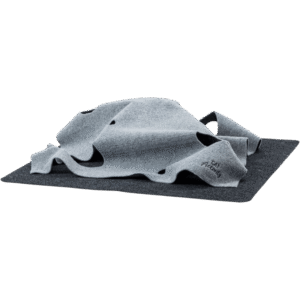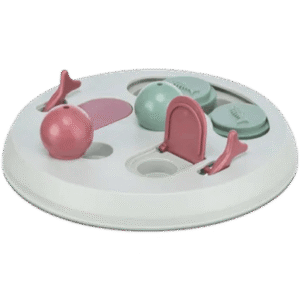
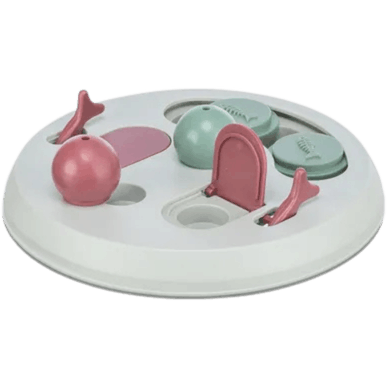
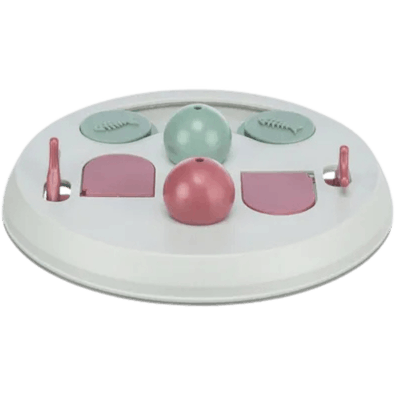
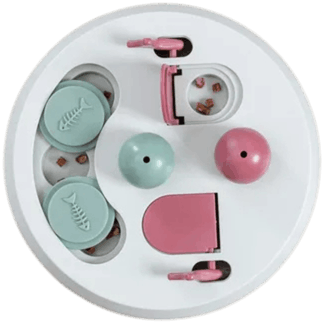
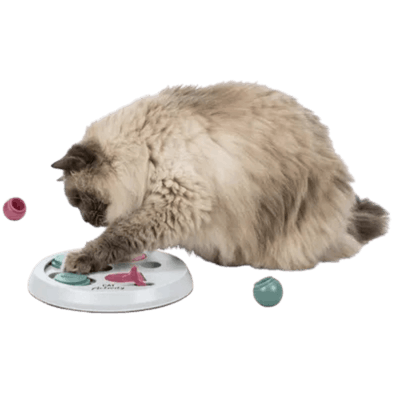
The Trixie Cat Activity Flip Board is an engaging puzzle toy that rewards your cat’s perseverance and problem-solving skills. The board features a variety of mechanisms your cat must operate to reach the treats hidden underneath, encouraging curiosity and mental stimulation.
The Flip Board is equipped with cones, hinged lids, and sliding covers, the board invites your cat to use their paws in different ways to uncover the rewards. These varied challenges keep playtime interesting and help keep your cat entertained, engaged, and mentally active for longer.
Its compact, stable design with a non-slip base is ideal for both beginners and puzzle-savvy felines, making it a versatile addition to your enrichment toolkit. A training manual with tips for habituation and motivation is included. For cleaning, you can simply put the board and the individual parts in the dishwasher.
Benefits of puzzle toys
Cats spend around 80% of their awake time engaged in mental effort. This is an inseparable part of feline life – a cat’s day revolves around hunting, and activities like observing, strategising, and scenting are all part of every attempt to obtain food.
- Puzzle toys extend feeding activity – in the wild, acquiring food is a long, stimulating process
- They help fulfill your cat’s hunting instincts at home
- Cats exercise their sense of smell and coordination
- Mental effort helps prevent cognitive decline
- They are particularly useful for cats with disabilities (deaf, blind, or with mobility impairments)
- A treat obtained independently stimulates the reward system, boosts confidence, and triggers serotonin release – the so-called “happiness hormone”
- They calm cats
- They enrich the day and keep it interesting
- They complete the hunting cycle
- Puzzle toys can be used as an alternative when the owner has less time to fully engage in hunting play – but this should not become a frequent replacement. Interactive hunting play with your cat remains equally important
Choosing treats for puzzle toys
- First and foremost – use treats that your cat actually likes! If the reward isn’t attractive enough, your cat may not be motivated to make the effort
- Pay attention to the ingredients. Ideally, treats should consist of 100% dried or freeze-dried meat and/or organs, without grains, dairy products, or other additives that aren’t suitable for cats
- You can explore the treats available in our store to find suitable options
- Remember to include treats in your cat’s daily calorie intake, especially if your cat needs to lose weight
- If your cat has a chronic health condition, consult a veterinarian or animal nutritionist about the type and amount of treats you should give
Product description
- Varied: 2 cones each, flip & slide lid to open & fish out snacks with paws
- Incl. training instructions: step-by-step training for cats, tips for motivation
- Hygienic: game board and individual parts are dishwasher safe
- Does not slip when playing: Rubber ring on the underside prevents annoying slipping away during play
- Colour: pink/sage green
- Material: plastic
- Overall dimensions: Ø 23 x 3cm
- cones: approx. Ø 4cm
- food openings (cones & flaps): Ø 3cm
- food openings (slides): Ø 3,5cm
Note: The colours shown in the photos may vary slightly from the actual product, depending on your screen settings.
Cat behaviourist advice
Puzzle toys can be used to help with situations and challenges such as:
- boredom
- anxiety
- lack of confidence
- aggression
- difficulty regulating emotions
- preventing cognitive decline
Choose the difficulty level and type of puzzle toy to match your cat. A toy that is too easy may not hold their interest, while one that is too difficult could cause frustration. Be present when introducing a new toy and, if needed, support, guide, and assist your cat. If the toy proves too challenging, switch to an easier one. Reward your cat for their effort.
Use puzzle toys after a short session with a wand toy to complete the hunting sequence. Alternate between different puzzle toys to keep playtime varied and engaging.
For domestic cats, it is natural to hunt and eat individually. If you have more than one cat, each should have their own puzzle toy. This helps prevent competition over resources and avoids unnecessary conflicts within the group.